
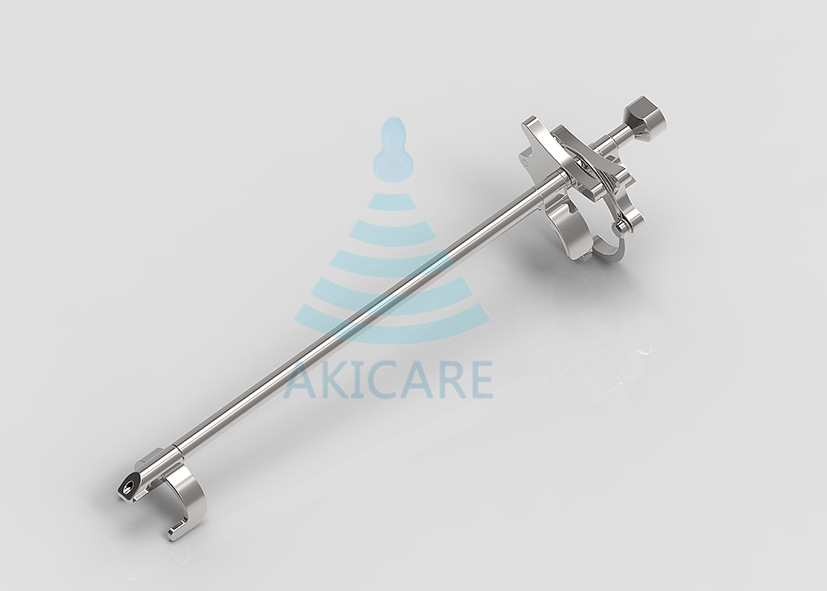
Answer first: A Siemens MC9-4 biopsy guide cannot be selected safely from a marketplace name or photograph alone. Match the exact guide reference to the complete MC9-4 probe identity and current manufacturer documentation, then verify needle specification, guide type, condition, included parts, reprocessing or single-use status and quotation-specific compatibility before ordering.
Editorial scope: This is a procurement and service-evidence guide. It does not replace the exact manufacturer’s instructions for use, a clinical procedure, a physical inspection, the equipment owner’s safety process or a quote-specific compatibility decision.
Evidence basis and limits
The cited regulatory, manufacturer, catalogue and peer-reviewed sources establish the document and evidence categories used here. They do not prove stock, condition, compatibility or performance for an uninspected item; those conclusions remain item- and quote-specific.
Siemens MC9-4 Biopsy Guide: decision matrix
| Decision field | Evidence to collect | Why it matters |
|---|---|---|
| Guide identity | Manufacturer, reference number and markings | Separates similar-looking guide assemblies |
| Probe identity | Complete MC9-4 label, suffix/part number and serial/reference | Links the guide to the exact physical probe |
| Fit evidence | Current manufacturer compatibility document or IFU | Prevents visual fit from becoming a compatibility claim |
| Guide type | Reusable, disposable, sterile or non-sterile status from labeling | Defines the documentation and handling path |
| Needle specification | Gauge/range, angle and path stated by the exact documentation | Avoids copying a specification from a similar guide |
| Condition | Current item photos and disclosed damage or missing parts | Creates an offer-specific baseline |
| Reprocessing | Current validated manufacturer instructions when reusable | Prevents a supplier article from replacing device labeling |
| Commercial scope | Quantity, included components, availability, shipping and remedy | Separates the listing from the order record |
Start with the guide reference and exact probe label
The words MC9-4 identify a probe model family, not every accessory configuration. Capture the guide markings and full probe label in the same request. If the source only shows a broad marketplace title, keep the match pending until current manufacturer documentation identifies the pairing.
Do not infer clinical performance from a product description
A supplier page can help locate a possible accessory. It cannot establish accuracy, procedural outcome, regulatory status or suitability for a patient or procedure. Those decisions remain with the current device labeling, qualified users and the facility's approved process.
Reusable and disposable paths require different records
If the exact labeling identifies a reusable guide, obtain the current validated cleaning and disinfection or sterilization instructions and inspection criteria. If it identifies a single-use or sterile product, retain the relevant labeling and packaging evidence. Do not choose the path from appearance alone.
A practical verification workflow
- Identify the item. Photograph the complete label, serial or internal reference, connector and full device. Use the same reference in filenames, the RFQ and shipping record.
- Record the request. State the host system, software context when relevant, intended product or service path and the observed symptom or purchasing need in plain language.
- Collect comparable evidence. Ask every provider for the same rows in the decision matrix. Keep representative catalogue imagery separate from photos of the offered or serviced unit.
- Resolve gaps before commitment. Leave unknown fields marked pending. A short model stem, broad category, logo, database hit or verbal assurance should not replace exact item evidence.
- Confirm the written boundary. The quotation or service record should state compatibility assumptions, condition, inspection or test scope, exclusions, availability, timing, shipping responsibility and remedy terms for that request.
Common evidence failures to avoid
- Guide identity: leaving this undocumented weakens the record because it separates similar-looking guide assemblies.
- Probe identity: leaving this undocumented weakens the record because it links the guide to the exact physical probe.
- Fit evidence: leaving this undocumented weakens the record because it prevents visual fit from becoming a compatibility claim.
- Guide type: leaving this undocumented weakens the record because it defines the documentation and handling path.
- Needle specification: leaving this undocumented weakens the record because it avoids copying a specification from a similar guide.
How to compare the final record
Read the evidence in three layers. The catalogue layer helps discover a possible model. The item layer connects photos, labels, condition and test records to one physical device. The commercial layer states what will be supplied or serviced and under which terms. A strong answer in one layer cannot fill a gap in another. For example, a correct catalogue match does not establish current stock, and a dated photo does not establish system compatibility.
Before approval, ask a second reviewer to check the exact model characters, connector family, host-system context and every unresolved field. This simple review catches copied model stems, mixed photo sets and scope assumptions that keyword matching alone cannot detect.
Keep an audit-ready decision record
Save the original-resolution photos, source links, document revisions, quotation and later inspection or acceptance record under the same item reference. Record who supplied each fact and the date it was checked. If a model, system, quantity, destination or service scope changes, open a new revision instead of silently overwriting the earlier answer. This preserves the reason behind the decision and prevents evidence collected for one configuration from being reused as a universal claim.
The final record should also identify what was not checked. Clear exclusions are useful: they show where an owner, manufacturer, qualified service provider or facility procedure must supply the next decision. An honest pending field is safer and more actionable than a polished but unsupported conclusion.
Browse the model-led ultrasound probe catalogue
Frequently asked questions
Does MC9-4 alone identify the correct guide?
No. Verify the guide reference, complete probe identity and current manufacturer compatibility documentation.
Can a similar-looking guide be used as a substitute?
Appearance is not compatibility evidence. Keep the match pending until the exact documentation supports it.
What should be requested before ordering?
Request identity, fit documentation, guide type, needle specification, condition, included parts, reprocessing status and written commercial terms.
Related evidence guides
- Ultrasound Biopsy Needle Guide Compatibility: What Must Match Before Ordering
- Reusable Biopsy Needle Guides: Documentation and Reprocessing Questions Before Ordering
Sources and scope
- FDA reusable-device reprocessing guidance
- CDC disinfection of healthcare equipment
- Akicare biopsy guide catalogue
Sources checked 3 August 2026. Use the current exact manufacturer document, facility procedure and jurisdiction-specific requirement for the device involved.