
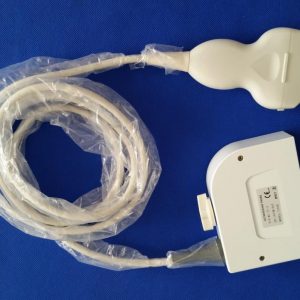
Answer first: A Shimadzu ultrasound probe request for an SDU350 or SDU450-family system should start with the complete console label, complete probe label, connector photographs and the exact supply or repair need. Do not assume that two SDU systems share a probe because the brand, era or connector shell looks similar. Keep compatibility pending until a current document or quote-specific written basis covers the exact pairing.
Shimadzu ultrasound probe evidence matrix
| Decision field | Evidence to collect | Why it matters |
|---|---|---|
| Host system | Complete console label, SDU model and any configuration identifier available to the owner | Separates a broad family name from the actual system receiving the probe |
| Probe identity | Manufacturer, complete model, suffix, part number and serial or internal reference | Shortened model names can hide a different housing, connector or revision |
| Connector | Front, rear, side, latch and cable-entry photographs | Eliminates obvious mismatches without treating appearance as proof |
| Current condition | Acoustic face, housing, cable, both strain reliefs and connector condition | Links the request to one physical item instead of a catalogue photo |
| Reported symptom | What appears, when it appears, the host system used and whether movement changes it | Creates a reproducible service-intake record without remote diagnosis |
| Compatibility basis | Current manual, service record or written quote-specific explanation | Makes the proposed pairing reviewable |
| Offer type | OEM-brand, third-party compatible, used, refurbished or repair service | Prevents unlike commercial paths from being presented as equivalent |
| Commercial scope | Exact item, included evidence, availability check date, logistics, exclusions and remedy terms | Defines what the quotation actually commits to |
Why the old SDU350 and SDU450 pages were consolidated
The previous SDU450 article was not an ultrasound-product guide: most of its text discussed fluorescent pH probes, chemical equilibrium and unrelated laboratory concepts. It could not help a buyer identify an ultrasound transducer and weakened the site’s topical accuracy. The older SDU350 page also mixed unsupported availability, discount and turnaround statements with model-level claims that were not tied to current manufacturer evidence. Those defects are removed rather than hidden behind a new title.
This page is now the single editorial owner for the narrow question: what evidence should a buyer or service team collect when an older Shimadzu SDU system needs a probe or probe assessment? It does not claim that Akicare currently holds a confirmed SDU350 or SDU450 probe in stock. The live catalogue and the written quotation remain the current commercial sources.
System identity and probe identity are different records
A console name identifies the host platform. A transducer label identifies the proposed or existing probe. Keep both labels in the same RFQ, but never merge their model numbers into one assumed product identity. When a seller lists only “for Shimadzu” or only an SDU console name, ask for the complete probe marking and connector before comparing the offer.
The connector photographs should show every face, the latch or locking geometry and the cable entry. This can screen out an obvious mismatch. It cannot establish electrical pinout, software support or every revision of the host system. If the available document does not name the exact pair, record that field as pending.
Do not copy frequency or application claims from a similar probe
Ultrasound frequency describes a depth-resolution trade-off, and array geometry affects footprint and image format. Those principles explain why different probes exist, but they do not supply the specification of an unidentified Shimadzu model. Obtain the bandwidth, array type, footprint and supported system context from the exact label and current supporting document. A model photo, a similar connector or a generic linear/convex description is not enough.
Qualified users and the equipment owner’s process define the intended application. A supplier page should identify the offered device and its evidence, not convert a purchasing guide into clinical operating instructions.
Repair versus replacement requires a defined inspection boundary
For an existing probe, first record observable facts: damage to the acoustic surface, housing, cable, strain relief or connector; the displayed symptom; the system used; and the conditions that reproduce the symptom. Do not assign an internal fault from a photograph. The repair provider should state what the incoming inspection covers, what tests are proposed, which work is included or excluded and what evidence will accompany the result.
A replacement comparison should use the same discipline. Ask for item-specific photographs, the exact offer type, the basis of the system match, included accessories, availability check date and remedy terms. A representative image or broad compatibility badge cannot prove the condition or fit of the unit quoted today.
Five-step RFQ workflow
- Capture both labels. Photograph the complete system and probe labels without shortening the model or suffix.
- Capture the connector and condition. Include all connector faces, lens, housing, cable and strain reliefs.
- State the request. Separate replacement sourcing from repair assessment and describe the symptom in observable language.
- Ask for the match basis. Request the document or written explanation that covers the exact proposed pairing.
- Approve one written scope. Tie identity, condition, compatibility assumptions, inspection or test evidence, availability, logistics and remedy terms to the same reference.
How to compare supplier answers
Place each supplier in a column and use the eight evidence fields as rows. Blank answers should remain blank or pending; do not infer them from another offer. Compare OEM-brand, compatible, used, refurbished and repair paths separately because the evidence and commercial scope differ. The lowest quoted amount is not comparable when the identity, condition, testing or logistics rows are missing.
Keep source links, document dates, original-resolution photos and the quotation under one item reference. If the model, system, quantity or service scope changes, open a new revision instead of silently reusing the earlier answer. This creates a useful record for receiving inspection and any later service decision.
Browse the current ultrasound probe catalogue
Request an ultrasound probe repair assessment
Frequently asked questions
Can an SDU350 probe be assumed to fit an SDU450 system?
No. Preserve the exact console and probe labels, connector views and available configuration documents, then keep the match pending until the written evidence covers that exact pair.
Does a physically matching connector prove compatibility?
No. A similar connector is an identification clue only; electrical, mechanical and system support still require exact evidence.
Should I buy a replacement before the current probe is inspected?
Not automatically. Record the symptom and physical condition, then compare a defined repair assessment with an evidence-backed replacement offer.
What should a Shimadzu probe RFQ include?
Include complete system and probe labels, connector photos, the reported symptom or sourcing need, condition photos, destination and the evidence you require with the quotation.
Related Akicare resources
- Ultrasound probe connector identification
- Ultrasound probe supplier evidence checklist
- Repair or replacement decision checklist
Sources and evidence boundary
- AIUM transducer testing and repair statement
- NCBI ultrasound physics and instrumentation
- Current Akicare ultrasound probe catalogue
Sources checked 4 August 2026. This guide does not claim a current manufacturer compatibility list for SDU350 or SDU450 systems. Confirm the exact current evidence for the device and configuration involved.