
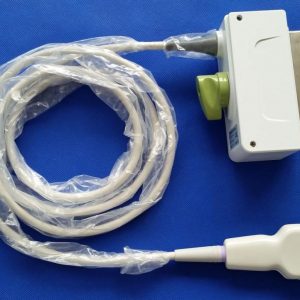
Answer first: The current Akicare SonoScape S2 catalogue map contains records for 2P1, 5P1, C354 and VC6-2. Treat that map as a shortlist, not automatic proof that every revision or software configuration supports every record. Before ordering or repair, confirm the complete probe label, connector, S2 system identity, configuration context and evidence attached to the specific quotation.
Sonoscape S2 Compatible Probes: evidence matrix
| Decision field | Evidence to collect | Why it matters |
|---|---|---|
| 2P1 | Current phased-array catalogue record | Confirm exact label and S2 configuration |
| 5P1 | Current phased-array catalogue record | Do not merge it with 2P1 because the model identity differs |
| C354 | Current micro-convex catalogue record | Confirm connector and supported configuration |
| VC6-2 | Current 3D/4D volume catalogue record | Confirm volume support and exact system context |
| Offer type | OEM-brand, compatible, used, refurbished or repair | Separates unlike commercial paths |
| Condition | Current photos tied to the quote | Catalogue media may be representative |
| Test scope | Named checks, conditions, results and exclusions | Defines what the evidence actually covers |
Why this page lists a finite current map
A broad article that says compatible probes without naming the current records gives Google and buyers little information beyond the system archive. This rewrite states the four records presently assigned to the S2 archive and links back to that live archive. If catalogue assignments change, the system page remains the current operational source.
System name alone is insufficient
SonoScape S2 identifies the host family but does not capture every hardware revision, connector detail or software context. Include a photo of the system label and the current probe or intended replacement connector. Ask the supplier to state the basis of the match in writing.
Keep condition evidence item-specific
A model-level page cannot establish the condition of a used or refurbished unit. Ask for dated lens, housing, cable, strain-relief and connector images tied to the item reference, plus the test scope that will accompany the offer.
Repair requests need symptom evidence
For repair, record what appears, when it appears, whether movement changes the symptom and the host system used. Do not assign an internal cause remotely. The incoming inspection and agreed test plan should control the service decision.
Verification workflow
- Open the S2 archive: Review current records and capture the intended model.
- Confirm labels: Send complete system and probe labels plus connector photos.
- State the supply path: Identify purchase, compatible replacement or repair.
- Approve written evidence: Confirm condition, test scope, availability and terms.
How to keep the decision auditable
Use one reference across the enquiry, photographs, source documents, quotation and later inspection or acceptance record. Save the date and origin of each fact. When the model, system, condition, quantity or service scope changes, create a new revision rather than silently reusing evidence from another item. Mark unresolved fields as pending; a missing answer should not be converted into a positive compatibility, condition or availability claim.
Before approval, have a second reviewer compare the complete model characters, connector, host-system context and quotation scope. This catches mixed photo sets, copied specifications and broad catalogue statements that do not belong to the physical item. The written quote is the final commercial control point and should identify the exact offer, evidence, exclusions, availability basis, shipping responsibility and remedy terms.
Evidence that belongs to the exact item
Keep general source material separate from item-level proof. A manufacturer page or technical reference can explain terminology and decision boundaries. A catalogue page can show that Akicare currently has a related record. Neither one proves the serial identity, present condition, stock position or test result of a unit offered today. Those facts require photographs, labels, inspection records or quotation statements tied to the same item reference. This separation is especially important when a page uses representative imagery or when a model name appears across several systems.
Questions to resolve before commitment
Ask whether every specification comes from the exact model document, whether the connector and host-system configuration were checked, whether photographs show the offered unit, and whether the test statement names its method and exclusions. Also confirm what is included, what remains pending, when availability was checked, who carries shipping responsibility and what remedy applies if the received identity or condition differs from the written record. These questions turn a broad search result into a reviewable B2B purchasing or service decision.
Record negative findings as carefully as positive ones. If a source does not establish a model pairing, if a photograph is representative, or if a test excludes part of the device, say so beside the affected field. Clear limitations help the next reviewer act; vague confidence only hides the remaining work.
Open the relevant Akicare catalogue or assessment
Frequently asked questions
Which S2 records are currently mapped?
The current archive shows 2P1, 5P1, C354 and VC6-2.
Does the archive prove every S2 configuration?
No. Confirm the exact host system, probe label, connector and configuration.
Can catalogue photos prove condition?
No. Request current photos tied to the quoted item.
Can the same page be used for repair?
Use it to identify the model, then provide symptom and unit-specific evidence through the repair assessment.
Related Akicare resources
Sources and evidence boundary
- Akicare SonoScape S2 archive
- AIUM transducer testing and repair statement
- Akicare probe repair assessment
Sources checked 3 August 2026. Use the current exact manufacturer document, facility procedure and jurisdiction-specific requirement for the device involved.