
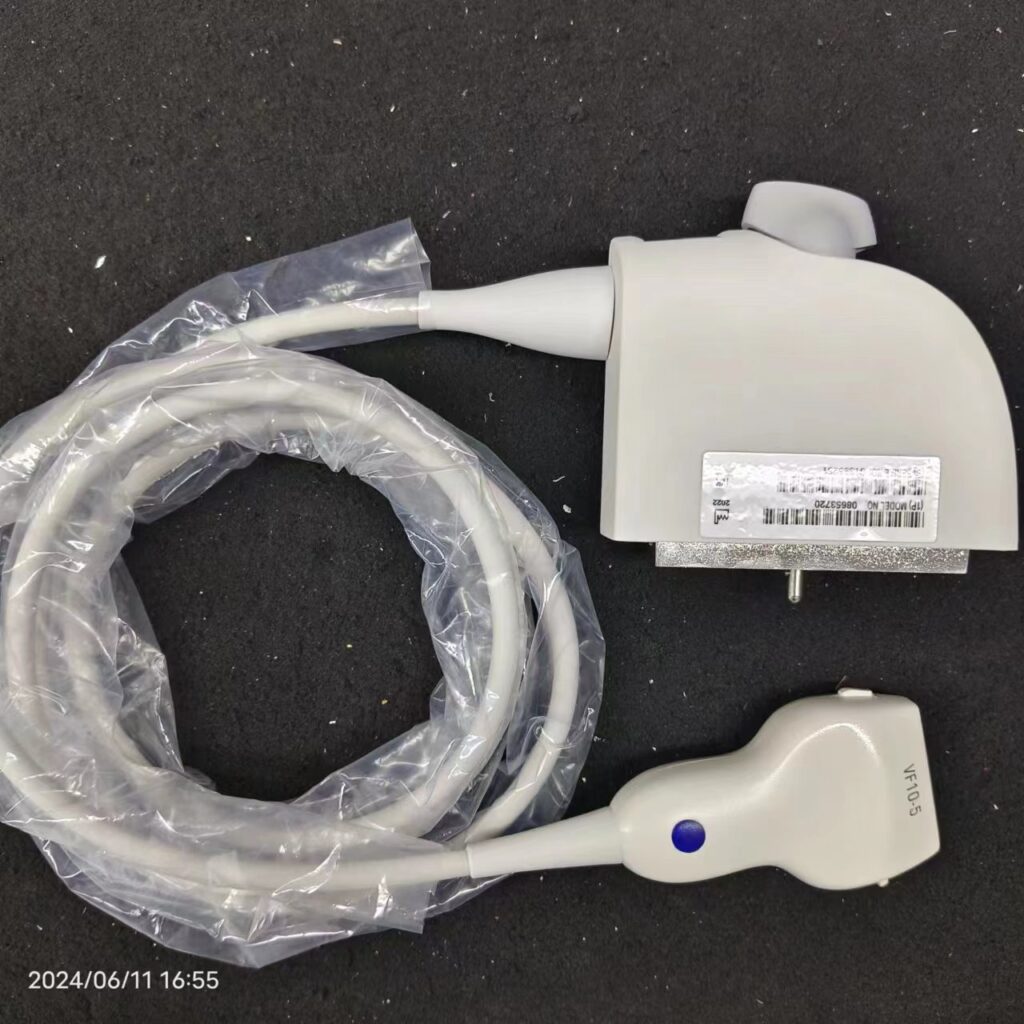
Answer first: Start with the complete VF10-5 label and the exact Siemens host system, then ask the supplier to tie the offered item, connector photographs, condition, compatibility basis, test scope and remedy terms to one written quotation. Do not choose between OEM, compatible, used, refurbished or repair routes from a price percentage or model stem alone.
Evidence matrix for this model request
| Field | Evidence to collect | Decision it supports |
|---|---|---|
| Probe identity | Complete label, suffix, part or serial reference | Separates the exact item from a similar model stem |
| Host system | Complete system label and available configuration context | Defines where the probe is expected to operate |
| Connector | Contact face, shell, latch and cable-entry photographs | Excludes obvious physical mismatches |
| Condition | Current photographs of patient-contact surface, housing, cable and strain reliefs | Documents the offered or existing physical unit |
| Compatibility basis | Current document or written quote-specific explanation | Makes the proposed match reviewable |
| Test scope | Named checks, item reference, date and result format | Replaces an undefined ‘fully tested’ claim |
| Offer type | OEM-brand, compatible, used, refurbished or repair service | Keeps different commercial paths separate |
| Commercial terms | Availability date, inclusions, exclusions, logistics and remedy | Defines what the quotation commits to |
Why the VF10-5 name is not the whole match
A model name is a discovery clue, not a complete compatibility record. Preserve every character and suffix on the transducer label, the host-system label, connector views and any available software or configuration context. If a manual or quotation covers a similar Siemens family but not the exact pairing, mark compatibility pending instead of converting family association into a universal claim.
Separate an offered replacement from the probe already in service
For a replacement, request dated photographs of the exact offered unit, its complete label, connector, current condition and offer type. For a repair assessment, record the identity and observable fault of the probe already owned. Those are different physical records; a catalogue image of a replacement cannot document the condition or repairability of the existing probe.
What a useful VF10-5 test statement should say
A generic 'fully tested' statement does not show which probe was tested, under what conditions or what result was recorded. Ask for the unit reference, named checks, test date, result format and acceptance boundary. AIUM's public statement emphasizes regular assessment of transducer operation and quality control after repair; the exact procedure remains with the manufacturer, service provider and equipment owner.
Build a repair-versus-replacement comparison without invented savings
A defensible comparison lists inspection, proposed work, parts basis, post-work verification, availability, transport, exclusions and remedy terms. Repair may be relevant when an existing unit is available for assessment, but neither cost nor turnaround should be presented as fixed before condition and scope are known. Compare like-for-like written offers instead of relying on a universal discount range.
Second-review rejection checks
Reject a VF10-5 offer that omits the physical probe label, names only a broad Siemens platform, or promises a fixed repair result before inspection. Ask the reviewer to compare every character in the model, inspect whether the connector photos belong to the same item and confirm that the quotation distinguishes current availability from general catalogue capability. Record any unresolved software or configuration dependency as pending. This review is especially important when a mature installed-base system has accumulated mixed service records or replacement parts from more than one source.
A six-step purchasing workflow
- Capture exact identity. Save unedited label and connector photographs for both the probe and host system.
- State one request. Say whether the need is replacement sourcing, repair assessment or a comparison of both.
- Request one evidence set. Ask every provider to complete the same matrix rather than answer a different sales question.
- Keep unknowns visible. Mark missing compatibility, condition, stock or test fields pending; do not infer them from branding.
- Approve a written scope. Tie the exact item, checks, availability, logistics, exclusions and remedy to one quote reference.
- Reconcile on receipt. Compare the delivered identity and documents with the approved record before the owner’s acceptance process.
How Akicare routes this request
The current product or catalogue record is the commercial starting point; availability and item-specific photographs must be reconfirmed for the quotation. The manufacturer browse page helps compare adjacent models without treating them as interchangeable. If an existing probe needs assessment, use the ultrasound probe repair intake and attach the same identity and condition evidence.
For a supplier comparison, use the site’s ultrasound probe supplier evidence checklist. This creates a consistent record across OEM-brand, compatible, used, refurbished and repair offers and prevents a broad catalogue claim from replacing item-level proof.
Frequently asked questions
Can the Siemens VF10-5 ultrasound probe match be confirmed from a photo alone?
No. Photos help identify labels, connector geometry and condition, but the exact host-system and configuration match still needs current written evidence.
Should an advertised price determine repair versus replacement?
No. Compare identity, condition, inspection or test scope, parts basis, availability, logistics, exclusions and remedy terms before comparing total cost.
What should be sent with the first RFQ?
Send complete probe and system labels, connector and condition photographs, the observed fault or sourcing need, destination and the evidence required with the quotation.
Does a similar connector prove compatibility?
No. It is an identification clue that can exclude an obvious mismatch; it does not establish electrical or software support.
Sources and limits
- AIUM transducer testing and repair statement
- CDC healthcare equipment disinfection and sterilization guidance
- Current Akicare model-led catalogue
Sources checked 4 August 2026. Confirm the current exact manufacturer document, device instructions, system configuration and facility process for the item involved.