
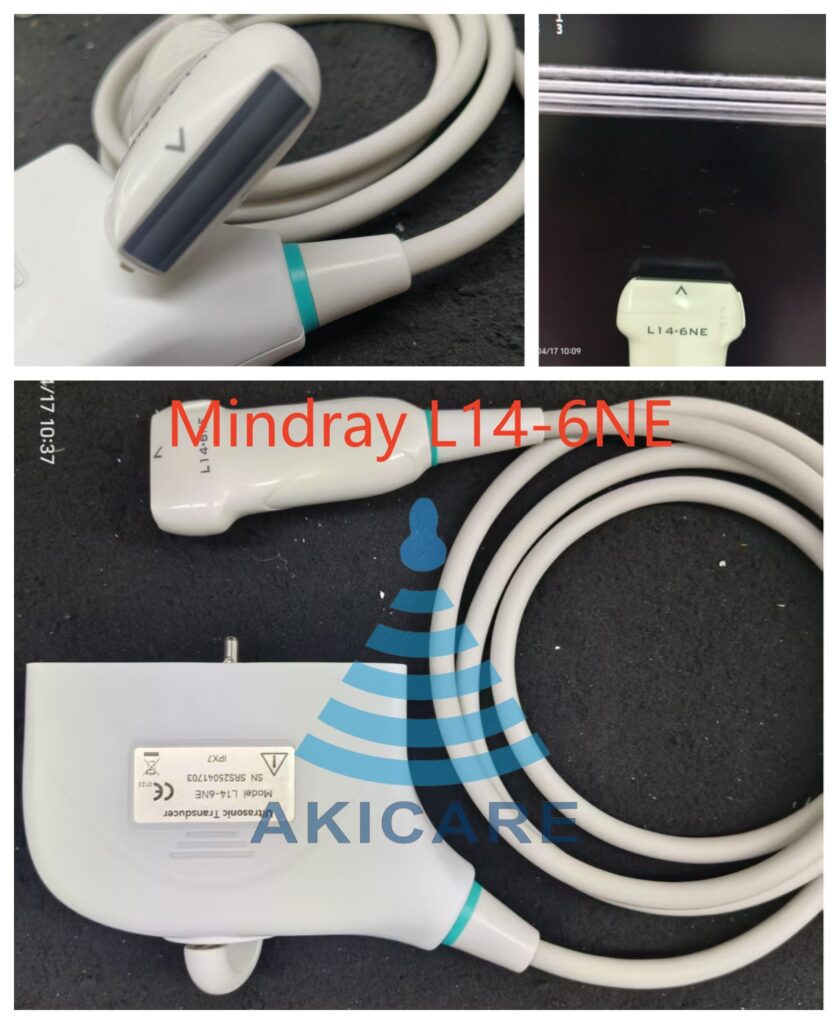
The Mindray L14-6NE is a 6–14 MHz linear ultrasound transducer used on Mindray DC-70 and DC-8 systems for vascular, small-parts, and musculoskeletal imaging. To buy the right one, confirm your console model, then choose between an OEM unit, a new aftermarket-compatible probe at 40–70% below OEM price, or a repair of your original at 30–60% of replacement cost. Here is how to work through that decision without overpaying or ordering the wrong part.
L14-6NE Specifications and Compatible Systems
The L14-6NE’s 6–14 MHz band puts it firmly in the high-frequency linear class: the upper end resolves superficial structures — thyroid, breast, tendons, peripheral nerves — while the lower end keeps enough penetration for deeper vascular work. The compatible version we supply is confirmed for the following Mindray consoles:
| Attribute | Detail |
|---|---|
| Probe model | L14-6NE |
| Array type | Linear |
| Frequency range | 6–14 MHz |
| Typical applications | Vascular, small parts, musculoskeletal |
| Compatible systems | Mindray DC-70, Mindray DC-8 |
| Condition | New aftermarket-compatible, or repair of your original |
Mindray’s linear lineup includes several similar-looking models (L14-6NE, L14-6WE, L12-3E and others) that are not interchangeable across consoles. Match the exact model printed on your probe label, and confirm your console before ordering — details are on the L14-6NE product page, alongside the rest of our Mindray-compatible probes.
Step-by-Step: Buying Without Mistakes
1. Confirm the model and console
Photograph the label on your existing probe and note your console model (DC-70 or DC-8, including any suffix). This single step prevents the most common and most expensive ordering error — a probe that arrives, plugs in, and never appears in the console’s probe list.
2. Decide between OEM, compatible, and repair
| Option | Typical Cost | Lead Time | Consider When |
|---|---|---|---|
| OEM replacement | Full list price | Distributor-dependent | OEM-only procurement policy |
| New compatible L14-6NE | 40–70% below OEM | Tested before dispatch; worldwide shipping | Dead probe, or adding a second unit |
| Repair of your original | 30–60% of replacement | 5–10 business days | Cable, lens, or limited element damage |
High-frequency linear probes take more physical abuse than any other type — they get carried, dropped, and scanned under pressure all day. Cable breaks at the strain relief and lens wear are the usual failures, and both are routine repairs. If your L14-6NE shows vertical banding or a dark strip in the image, that points to element dropout; whether it is repairable depends on how much of the array is affected, which is exactly what our repair evaluation determines before quoting.
3. Demand a per-element test report
Every probe we ship is tested element by element, and the report goes out with the probe. For a 6–14 MHz linear array used in vascular and small-parts work, weak elements destroy precisely the fine detail the probe exists to capture — a phantom image alone will not show you a marginal array. Insist on this report from any seller, including us.
Why Buyers Choose Compatible Over OEM Here
The practical case is simple: identical clinical function on the supported consoles, 40–70% lower cost, and documented element-level test evidence rather than a verbal assurance. The compatible L14-6NE is an aftermarket product — not manufactured by or affiliated with Mindray — and we label it as such. What you give up is the OEM logo; what you keep is the budget for the rest of your equipment plan.
Frequently Asked Questions
What is the difference between the L14-6NE and the L14-6WE? They are separate Mindray part numbers with different console support, and they are not interchangeable. Order by the exact model printed on your probe label, not by the frequency range — several Mindray linears share the 6–14 MHz class.
My image shows a dark vertical strip. Is the probe repairable? A dark band usually means element dropout in that section of the array. Whether repair is economical depends on how many elements are affected and where they sit; that is what the evaluation stage determines, and you receive the per-element measurement either way.
Do you ship internationally, and what comes with the probe? Yes — every L14-6NE ships worldwide with its element-by-element test report tied to the unit’s serial number, whether it is a new compatible probe or your own probe returning from repair.
Get a Quote
Send your console model and probe label photo for a replacement quote, or describe the fault for a repair evaluation. We respond with confirmed compatibility, pricing, and lead time, and every unit ships worldwide with its test report. Start at the L14-6NE product page or through our repair service page.
Evidence boundary and verification record
For Mindray L14-6NE Ultrasound Probe: How to Buy the Right One, the complete label, connector, host-system record and physical item must remain linked. Similar model stems can describe different probes, and representative photographs do not establish the condition of a used or refurbished unit. Keep discovery, item and commercial evidence in separate rows. When the original item is unavailable, state that the search begins from a requirement rather than pretending that a replacement model has already been identified.
AIUM describes why transducer operation and repair quality control require structured assessment. The published BMUS multicentre survey supports documenting physical and performance condition across a probe fleet. Applied to Mindray L14-6NE Ultrasound Probe: How to Buy the Right One, these sources justify item-level checks but do not diagnose a probe or establish a system match remotely.
Primary sources and limits
- AIUM transducer testing and repair statement — professional guidance on transducer assessment and post-repair quality control.
- CDC healthcare-equipment disinfection and sterilization guidance — a processing framework tied to device use and instructions.
- BMUS multicentre probe-condition survey — published fleet research, not an item-level diagnosis.
Evidence questions
Does this evidence prove the exact compatibility described in Mindray L14-6NE Ultrasound Probe: How to Buy the Right One?
No. It defines what should be collected and reviewed. Exact compatibility remains tied to the complete labels, configuration, current documentation and written item-specific decision.
Can the commercial terms for Mindray L14-6NE Ultrasound Probe: How to Buy the Right One be assumed from this article?
No. Availability, condition, included work, timing, logistics, exclusions and remedy must be confirmed in the current quotation for the exact request.