
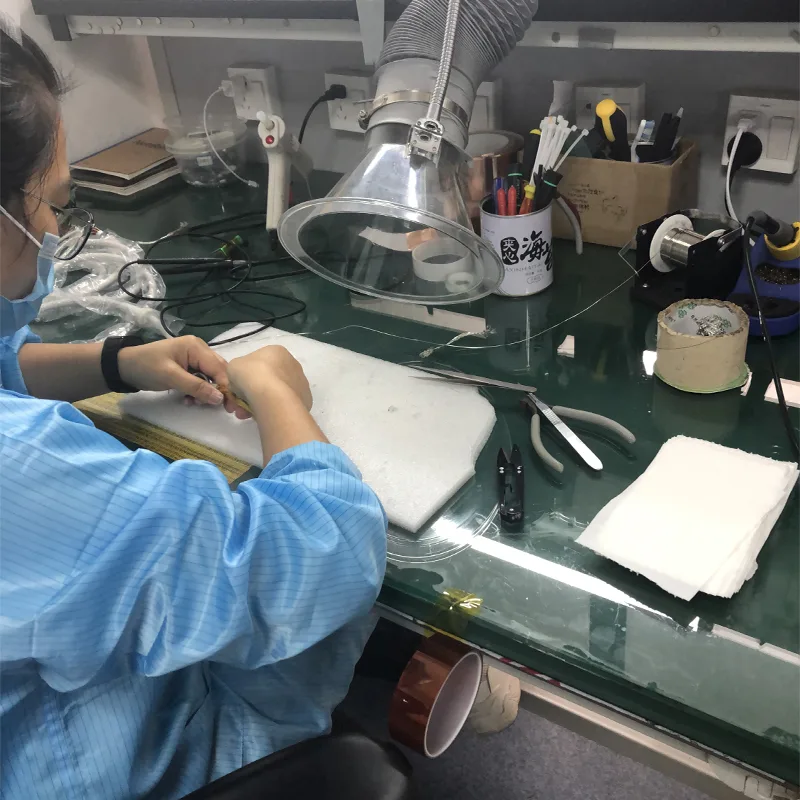
Answer first: Ultrasound probe repair cost cannot be estimated responsibly from a model name alone. The quotation changes with the exact probe, reported symptom, physical condition, inspection scope, repair boundary, parts, verification record, logistics and commercial terms. Send those inputs together so the offers being compared describe the same work.
Editorial scope: This is a procurement and service-evidence guide. It does not replace the exact manufacturer’s instructions for use, a clinical procedure, a physical inspection, the equipment owner’s safety process or a quote-specific compatibility decision.
Evidence basis and limits
AIUM's official statement says regular assessment of transducer operation and quality control of repaired transducers are critical. The cited sources support the inspection and evidence boundaries used here; they do not prove the condition of an item that has not been inspected.
Ultrasound Probe Repair Cost: decision matrix
| Decision field | Evidence to collect | Why it matters |
|---|---|---|
| Exact identity | Model, serial/reference and label photos | Separates similar probe variants |
| Reported symptom | What appears, when and on which system | Makes the complaint reproducible |
| Visible condition | Lens, housing, cable, strain relief and connector photos | Records external damage before shipment |
| Inspection boundary | Remote review, incoming inspection and any bench work | Shows what is included before repair approval |
| Repair scope | Named area or component and exclusions | Prevents unlike quotes being compared |
| Parts basis | New, repaired, reclaimed or not yet known | Clarifies an important cost dependency |
| Verification | Named post-work checks and report format | Connects price to delivered evidence |
| Logistics | Origin, destination, carrier responsibility and packaging | Separates transport from service work |
| Remedy terms | Inspection window and agreed response | Defines the commercial boundary |
Why public price tables are usually misleading
Two probes with the same model can arrive with different symptoms, prior repairs and physical damage. A public price that does not define inspection, parts and verification scope may compare a narrow cable repair with a broader service job. Use the price only after the rows in the decision matrix match.
Separate estimate, inspection finding and approved quote
A remote estimate can help route the request. The incoming inspection records the actual condition. The approved quotation should then name the work, exclusions and post-work evidence. Keep those three stages separate so an early estimate is not mistaken for a final scope.
Build a comparable quote table
Place each provider in one column and use the nine factors as rows. Leave missing answers blank or pending. Do not convert a missing test record or unspecified part into an assumed inclusion simply to make totals look comparable.
A practical verification workflow
- Identify the item. Photograph the complete label, serial or internal reference, connector and full device. Use the same reference in filenames, the RFQ and shipping record.
- Record the request. State the host system, software context when relevant, intended product or service path and the observed symptom or purchasing need in plain language.
- Collect comparable evidence. Ask every provider for the same rows in the decision matrix. Keep representative catalogue imagery separate from photos of the offered or serviced unit.
- Resolve gaps before commitment. Leave unknown fields marked pending. A short model stem, broad category, logo, database hit or verbal assurance should not replace exact item evidence.
- Confirm the written boundary. The quotation or service record should state compatibility assumptions, condition, inspection or test scope, exclusions, availability, timing, shipping responsibility and remedy terms for that request.
Common evidence failures to avoid
- Exact identity: leaving this undocumented weakens the record because it separates similar probe variants.
- Reported symptom: leaving this undocumented weakens the record because it makes the complaint reproducible.
- Visible condition: leaving this undocumented weakens the record because it records external damage before shipment.
- Inspection boundary: leaving this undocumented weakens the record because it shows what is included before repair approval.
- Repair scope: leaving this undocumented weakens the record because it prevents unlike quotes being compared.
How to compare the final record
Read the evidence in three layers. The catalogue layer helps discover a possible model. The item layer connects photos, labels, condition and test records to one physical device. The commercial layer states what will be supplied or serviced and under which terms. A strong answer in one layer cannot fill a gap in another. For example, a correct catalogue match does not establish current stock, and a dated photo does not establish system compatibility.
Before approval, ask a second reviewer to check the exact model characters, connector family, host-system context and every unresolved field. This simple review catches copied model stems, mixed photo sets and scope assumptions that keyword matching alone cannot detect.
Keep an audit-ready decision record
Save the original-resolution photos, source links, document revisions, quotation and later inspection or acceptance record under the same item reference. Record who supplied each fact and the date it was checked. If a model, system, quantity, destination or service scope changes, open a new revision instead of silently overwriting the earlier answer. This preserves the reason behind the decision and prevents evidence collected for one configuration from being reused as a universal claim.
The final record should also identify what was not checked. Clear exclusions are useful: they show where an owner, manufacturer, qualified service provider or facility procedure must supply the next decision. An honest pending field is safer and more actionable than a polished but unsupported conclusion.
Request an ultrasound probe repair assessment
Frequently asked questions
Can repair cost be fixed from the probe model?
Not reliably. The model identifies the product family, while condition, fault, inspection and repair scope determine the job.
Should shipping be included in the comparison?
Yes, but show it as a separate logistics row so service work and transport are not blended.
What evidence should accompany the price?
Request the exact identity, incoming condition, repair scope, parts basis, verification scope, exclusions and remedy terms.
Related evidence guides
- Ultrasound Probe Repair Assessment: What to Send Before Requesting a Quote
- What Does OEM-Quality Probe Repair Mean? Ask for Test Scope, Parts and Evidence
Sources and scope
- AIUM transducer testing and repair statement
- GE HealthCare probe diagnostics
- Akicare repair assessment
Sources checked 3 August 2026. Use the current exact manufacturer document, facility procedure and jurisdiction-specific requirement for the device involved.
{“@context”:”https://schema.org”,”@type”:”FAQPage”,”mainEntity”:[{“@type”:”Question”,”name”:”Can repair cost be fixed from the probe model?”,”acceptedAnswer”:{“@type”:”Answer”,”text”:”Not reliably. The model identifies the product family, while condition, fault, inspection and repair scope determine the job.”}},{“@type”:”Question”,”name”:”Should shipping be included in the comparison?”,”acceptedAnswer”:{“@type”:”Answer”,”text”:”Yes, but show it as a separate logistics row so service work and transport are not blended.”}},{“@type”:”Question”,”name”:”What evidence should accompany the price?”,”acceptedAnswer”:{“@type”:”Answer”,”text”:”Request the exact identity, incoming condition, repair scope, parts basis, verification scope, exclusions and remedy terms.”}}]}