
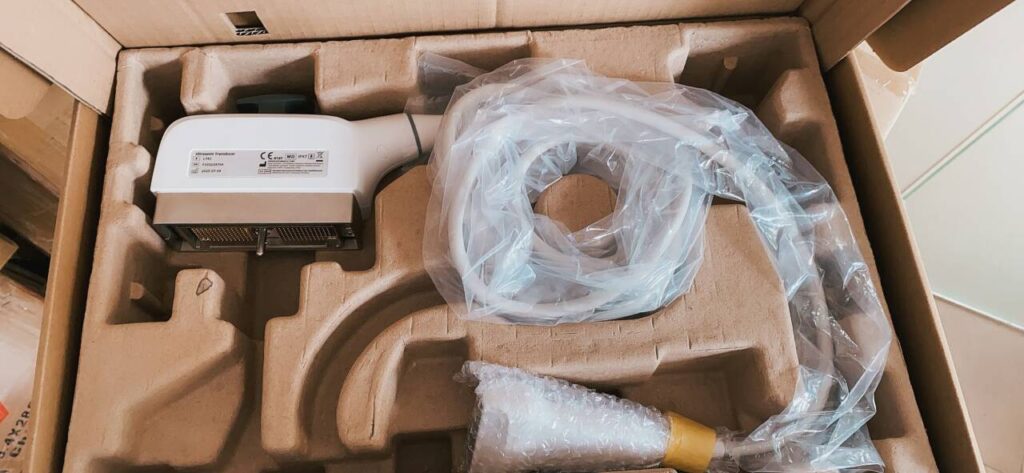
Consider replacing a SonoScape L743 probe when image degradation remains after the console, settings, and connection have been checked, or when physical damage makes continued use unsafe. Consider repair only after the individual probe has been inspected and the proposed work is described in writing. Cost, feasibility, and timing vary by unit, so this page does not promise a saving, turnaround, or temporary replacement service.
What the L743 is used for
The L743 is listed as a linear-array probe for SonoScape systems and is associated with vascular, thyroid, breast, musculoskeletal, and other superficial-imaging applications. The model name alone is not enough to approve a purchase. Match the probe label, part number, connector, console model, software configuration, and intended application for the exact system.
Check the system before deciding the probe has failed
Record the artifact and the conditions under which it appears. Confirm that the connector is fully seated, inspect the connector and cable for visible damage, review the relevant console settings, and follow the facility’s service procedure. If an approved known-good probe is available, comparison on the same console may help isolate the fault. These steps support a technical review; they do not replace evaluation by qualified biomedical or service personnel.
What to inspect on the L743
- Acoustic surface: look for cuts, lifting, swelling, or separation.
- Cable and strain relief: look for crushing, kinks, exposed material, or intermittent behavior when the cable is held still.
- Housing and connector: check for cracks, contamination, bent contacts, or a loose shell.
- Image behavior: document where the artifact appears and whether it persists after the system checks above.
Remove a visibly damaged probe from clinical use and follow the facility’s safety process. Do not infer continued fitness from appearance alone.
What the available report can and cannot show
Ask the supplier to state the inspection methods actually performed and request the available simple inspection report. The document should list its scope and limitations. It must not be described as a detailed crystal assessment, a regulatory certificate, or a guarantee of clinical performance or remaining service life. Any additional checks required by the facility must be completed through the appropriate qualified process.
Repair or replacement decision table
| Observed condition | Safe next step | Decision gate |
|---|---|---|
| Acoustic-surface, cable, strain-relief, housing, or connector damage | Request an evaluation | Use the written scope and quotation; do not assume repairability |
| Persistent image artifact after system checks | Request technical assessment | Compare the documented findings with replacement options |
| Liquid exposure or compromised enclosure | Remove from clinical use and evaluate | Follow the facility safety process before reuse |
| No confirmed fault but a replacement is being considered | Verify the exact unit and system first | Match label, part number, connector, console, and software |
If replacement is being considered
An independently supplied compatible L743 is not represented as manufactured or endorsed by SonoScape. Review the SonoScape-compatible probe listings as a starting point only. Before ordering, require written confirmation of the exact model and part number, compatibility basis, condition, inspection scope, simple report, current availability, return terms, and dispatch estimate.
Information to send with an evaluation request
Provide the console model and software information, clear photos of the probe label and connector, a description of the artifact or physical damage, and any facility observations already recorded. The probe repair service can then prepare an evaluation scope and quotation. A symptom description supports triage but does not guarantee a diagnosis, repair outcome, or replacement recommendation.
Operational planning
If the L743 is the only probe available for its application, arrange internal backup coverage before sending it away. Ask the quotation to state expected timing and what support is actually included. Keep the final inspection and service documents with the device record, and follow the facility’s approved checks before returning the probe to clinical use.
Evidence boundary and verification record
For When Should You Replace a Sonoscape L743 Ultrasound Probe?, the complete label, connector, host-system record and physical item must remain linked. Similar model stems can describe different probes, and representative photographs do not establish the condition of a used or refurbished unit. Keep discovery, item and commercial evidence in separate rows. Date the source check so later changes in documents or availability do not silently alter the decision.
Evidence matrix
| Field | What to collect | Why it matters |
|---|---|---|
| Exact identity | Full probe and system labels with connector views | Prevents nearby models from being merged |
| Condition | Current lens, housing, cable, strain-relief and connector evidence | Documents the offered or existing unit |
| Verification | Named checks, item reference, date and result format | Replaces a broad quality label |
| Terms | Offer type, availability check, exclusions, logistics and remedy | Defines the commercial boundary |
Use the same matrix for every provider. Mark an unknown field pending instead of borrowing a specification, compatibility statement or condition claim from a similar model. The final record should identify the offered item, the source for each fact and the date on which availability and commercial terms were checked.
AIUM describes why transducer operation and repair quality control require structured assessment. The published BMUS multicentre survey supports documenting physical and performance condition across a probe fleet. Applied to When Should You Replace a Sonoscape L743 Ultrasound Probe?, these sources justify item-level checks but do not diagnose a probe or establish a system match remotely.
Primary sources and limits
- AIUM transducer testing and repair statement — professional guidance on transducer assessment and post-repair quality control.
- CDC healthcare-equipment disinfection and sterilization guidance — a processing framework tied to device use and instructions.
- BMUS multicentre probe-condition survey — published fleet research, not an item-level diagnosis.
Evidence questions
Does this evidence prove the exact compatibility described in When Should You Replace a Sonoscape L743 Ultrasound Probe??
No. It defines what should be collected and reviewed. Exact compatibility remains tied to the complete labels, configuration, current documentation and written item-specific decision.
Can the commercial terms for When Should You Replace a Sonoscape L743 Ultrasound Probe? be assumed from this article?
No. Availability, condition, included work, timing, logistics, exclusions and remedy must be confirmed in the current quotation for the exact request.