
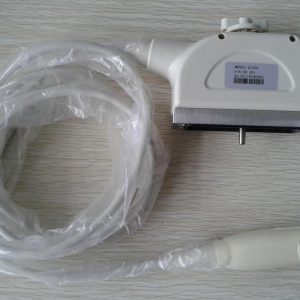
You can obtain a compatible WELLD 9608 probe for your RTG4 ultrasound scanner directly through our China-based sourcing network. WELLD Electronics is a Shenzhen manufacturer of portable and veterinary ultrasound, and its transducers are not stocked by the large OEM channels, so a specialist aftermarket supplier is usually the fastest route. Send us the model number and we will match a compatible head for your RTG4 unit.
WELLD is a lower-volume brand, so we source these probes to order rather than list fixed specifications we cannot verify. Here is how compatibility, sourcing, and pricing work for the 9608 on the RTG4 platform.
Compatibility with the RTG4 scanner
The 9608 is a WELLD transducer intended for the RTG-series portable scanners. Because WELLD uses its own connector and channel layout, a probe must be matched to the exact system revision — a head built for one RTG generation will not always enumerate on another. To confirm a correct fit we need:
- The full model marking on your current probe connector.
- The exact RTG4 system label and, where available, software revision.
- The clinical application you scan (abdominal, small parts, OB, veterinary, etc.).
With those details we verify the array type and frequency against our supply before quoting, so you do not receive a head that the machine cannot read.
Sourcing a cold-brand probe from China
Brands like WELLD sit outside the mainstream GE, Philips, and Mindray aftermarket, which is exactly where a China-source supplier helps. We supply compatible transducers from the manufacturing region where these probes originate, which keeps pricing well below any parallel OEM channel. Practical expectations:
- Pricing — compatible heads sourced this way typically run 40 to 70 percent under OEM-equivalent quotes.
- Lead time — in-stock units generally ship in about 5 to 10 working days; sourced-to-order heads take longer, and we confirm before you commit.
- Testing — each probe is function-tested before dispatch.
Repair as an alternative
If your existing 9608 has intermittent elements, a cracked lens, or a damaged cable, repair is often the better economic call. A probe repair usually costs 30 to 60 percent of buying a replacement, and turnaround is comparable to a stock order. Our probe repair page explains what we can and cannot recover. For other portable-system probes, browse our full compatible probe catalogue.
Why part numbers matter more than brand names
With a lower-volume brand like WELLD, the model marking on the connector is the only reliable way to match a probe. Marketing names and machine badges change between production runs, but the transducer part number ties the head to a specific array geometry, element count, and connector pinout. When you send us the 9608 marking together with the RTG4 system label, we cross-reference both against our supply so the head we ship enumerates and images rather than sitting unrecognised. Guessing from the brand alone is how buyers end up with a probe the machine will not read.
Each unit we source is bench-checked for element continuity, cable integrity, and connector condition before dispatch, and we tell you plainly whether a probe is new-compatible, refurbished, or a tested pull so you can price the risk yourself.
Freight and lead time for RTG4 probes
Once a 9608 is matched and quoted, delivery is straightforward. Stock heads generally leave within about 5 to 10 working days; sourced-to-order units take longer and we confirm the window before you pay. We ship worldwide by courier and share tracking on dispatch. Because the RTG4 is a portable platform often used outside large hospitals, we can also advise whether a repair of your existing head would return the machine to service faster than waiting on a sourced replacement, and we price both options so you can choose on cost and timing rather than guesswork.
Request a quote
Because WELLD probes are sourced individually, the quickest path is a direct RFQ. Send us your 9608 and RTG4 model numbers on WhatsApp at +86 136 2236 3037 or through our contact page, and we will confirm availability and price.
Evidence boundary and verification record
For Compatible WELLD 9608 Ultrasound Probe for the RTG4, the complete label, connector, host-system record and physical item must remain linked. Similar model stems can describe different probes, and representative photographs do not establish the condition of a used or refurbished unit. Keep discovery, item and commercial evidence in separate rows. When the original item is unavailable, state that the search begins from a requirement rather than pretending that a replacement model has already been identified.
Evidence matrix
| Field | What to collect | Why it matters |
|---|---|---|
| Exact identity | Full probe and system labels with connector views | Prevents nearby models from being merged |
| Condition | Current lens, housing, cable, strain-relief and connector evidence | Documents the offered or existing unit |
| Verification | Named checks, item reference, date and result format | Replaces a broad quality label |
| Terms | Offer type, availability check, exclusions, logistics and remedy | Defines the commercial boundary |
Use the same matrix for every provider. Mark an unknown field pending instead of borrowing a specification, compatibility statement or condition claim from a similar model. The final record should identify the offered item, the source for each fact and the date on which availability and commercial terms were checked.
AIUM describes why transducer operation and repair quality control require structured assessment. The published BMUS multicentre survey supports documenting physical and performance condition across a probe fleet. Applied to Compatible WELLD 9608 Ultrasound Probe for the RTG4, these sources justify item-level checks but do not diagnose a probe or establish a system match remotely.
Primary sources and limits
- AIUM transducer testing and repair statement — professional guidance on transducer assessment and post-repair quality control.
- CDC healthcare-equipment disinfection and sterilization guidance — a processing framework tied to device use and instructions.
- BMUS multicentre probe-condition survey — published fleet research, not an item-level diagnosis.
Evidence questions
Does this evidence prove the exact compatibility described in Compatible WELLD 9608 Ultrasound Probe for the RTG4?
No. It defines what should be collected and reviewed. Exact compatibility remains tied to the complete labels, configuration, current documentation and written item-specific decision.
Can the commercial terms for Compatible WELLD 9608 Ultrasound Probe for the RTG4 be assumed from this article?
No. Availability, condition, included work, timing, logistics, exclusions and remedy must be confirmed in the current quotation for the exact request.