
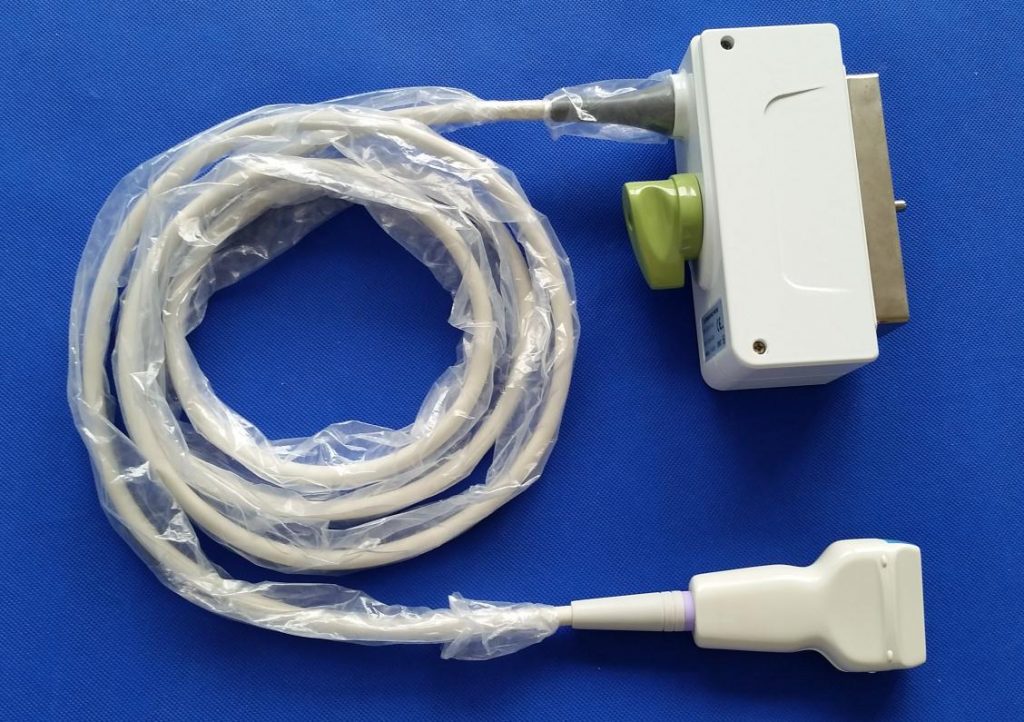
Answer first: A compatible Emperor 860 probe can be sourced, but a rare console name is not enough to select one. The buyer should preserve the complete probe and system labels, photograph the connector and housing, state the examination requirement, and require the supplier to document the match to the exact offered unit. Unknown fields should remain pending rather than being filled with facts from a similar Emperor model.
Treat the Emperor 860 as an evidence-recovery request
Large OEM platforms often have extensive public compatibility tables. A less common console may have fragmented distributor records, retired documents and inconsistent listing names. That changes the sourcing workflow. It does not lower the compatibility standard. Procurement should build a compact equipment record first and then ask each supplier to answer the same questions against that record.
Start with unedited photographs of the console label, installed probe label, connector contact face, connector shell, latch or locking geometry, cable entry and full probe. Record which information came from the physical equipment and which came from a catalogue. That separation prevents a plausible database result from replacing the item the department actually uses.
Emperor 860 sourcing evidence matrix
| Evidence field | What to collect | Decision supported |
|---|---|---|
| System identity | Complete console label and available configuration record | Defines the platform named in the request |
| Existing probe identity | Full model, suffix and internal asset reference | Supplies the strongest replacement clue |
| Physical interface | Connector face, shell, latch and cable-entry photographs | Excludes obvious mechanical mismatches |
| Clinical requirement | Examination type and required array class stated by the owner | Prevents the wrong class from being quoted |
| Compatibility basis | Current document or quote-specific written explanation | Makes the supplier’s conclusion reviewable |
| Offered item | Exact model, condition description and item imagery when applicable | Connects the quote to one physical unit |
| Verification scope | Named checks, item reference, date and result format | Replaces an undefined quality claim |
| Commercial record | Availability check, inclusions, exclusions, logistics and remedy | Defines what approval commits to |
Use probe classes as requirements, not compatibility claims
General ultrasound systems may be used with convex, linear, endocavity or phased-array transducers for different examination needs. Those class names help the owner describe the request. They do not identify an Emperor 860 probe, frequency range or connector. Ask the department which installed head it is replacing and capture the original label before searching.
If the original probe is missing, state that the inquiry begins from a clinical and system requirement, not from a known replacement model. A supplier can then propose a candidate, but the proposal must show how the model, connector, system support and intended use were reconciled. Do not turn a candidate into a compatibility statement until that evidence is attached.
Catalogue discovery and unit-level evidence are different layers
A catalogue page can reveal a model name and provide a route to an RFQ. It cannot prove current availability, condition or operation of an item that has not been identified and inspected. Representative imagery should be labelled as such. Photos of the offered unit should carry the same reference as the quotation and any inspection record.
Connector images are especially useful for exclusion. A visibly different shell or latch can stop a bad match early. A similar connector cannot prove pin assignment, electrical support or software recognition. Keep the connector observation and the supplier’s compatibility conclusion in separate rows of the purchase file.
A practical seven-step workflow
- Create one equipment record. Combine full labels, connector views, system context and the observed sourcing or service need.
- State one decision. Say whether the owner needs replacement sourcing, repair assessment or a like-for-like comparison of both.
- Search by the most specific identity. Prefer the installed probe model; otherwise search from the documented system and requirement without inventing a model.
- Request comparable evidence. Ask each provider to complete the same matrix and identify every unresolved field.
- Review item condition separately. Require current photos and a defined inspection scope when a used or refurbished unit is offered.
- Approve the written boundary. Tie compatibility assumptions, condition, checks, exclusions, availability and remedy to one quote reference.
- Reconcile delivery. Compare the received identity and documents with the approved record before the equipment owner’s acceptance process.
Repair path for an identified existing probe
When the installed probe is available, record observable symptoms without declaring the internal cause. Lens separation, cable damage, strain-relief damage, connector damage and image concerns lead to different inspection paths, but photographs alone do not determine scope or economics. Use the ultrasound probe repair assessment and request the incoming inspection, proposed work, post-work checks and exclusions in writing.
AIUM’s official statement supports regular assessment of transducer operation and quality control after repair. The BMUS multicentre survey shows why probe condition deserves structured attention across a fleet. Neither source establishes what is wrong with this Emperor 860 probe; an item-level assessment still owns that conclusion.
Common failure modes
- Searching “fits Emperor” without retaining the complete console and probe markings.
- Using frequency or application text from a nearby model as if it described the offered item.
- Accepting a representative image as evidence of current condition.
- Calling connector similarity proof of electrical or software compatibility.
- Comparing headline price before the offers define the same condition and verification scope.
- Leaving unresolved fields out of the approved quotation.
Commercial next step
Start with the model-led probe catalogue, then send the equipment record through the contact page. The supplier evidence checklist helps compare candidates without converting a rare-platform search into an unsupported promise.
Frequently asked questions
Where should an Emperor 860 probe search begin?
Begin with the complete model on the existing probe label and the console record, then ask suppliers to identify a candidate and explain the proposed match in writing.
Does a similar connector prove that a probe will work on the Emperor 860?
No. Connector geometry can exclude an obvious mismatch, but it does not establish electrical support, software recognition, array characteristics or item condition.
Which probe class should be requested for an Emperor 860?
Describe the examination need and preserve the existing probe model when available. Do not select a convex, linear, endocavity or phased-array candidate from class name alone.
Can an existing Emperor 860 probe be assessed for repair?
Yes. Record the exact identity, observable symptom and external condition, then request an inspection-led scope. A photograph cannot establish the internal fault or repairability.
Sources and scope
- AIUM transducer testing and repair statement — a professional quality-control boundary, not proof for an uninspected unit.
- BMUS multicentre probe-condition survey — fleet-level evidence supporting structured checks, not an Emperor 860 diagnosis.
- CDC healthcare-equipment guidance — a general processing framework that directs users to applicable device instructions.